Guide
Chord Transposer & Capo Calculator: the complete guide
By Vivek Badoni, music teacher · Updated
This free chord transposer changes the key of a whole song in one click. Paste a chord sheet, move it up or down until it suits your voice, choose sharps or flats, and copy the result. The built-in capo calculator then finds where to put a capo so you can play the new key with easy open shapes like G, C, D, A and E. Your lyrics stay exactly as they are; only the chords change.
How to transpose chords to a different key
- Paste your song. Chords can sit on their own line above the lyrics, or inline in square brackets like
[Am]. - Press + to move every chord up a semitone or − to move down. Each press is one fret on the guitar.
- Sing the highest and lowest lines of the song. When neither feels strained, you've found your key.
- Choose sharps or flats for the cleanest-looking chord names, then copy the result.
How a capo works
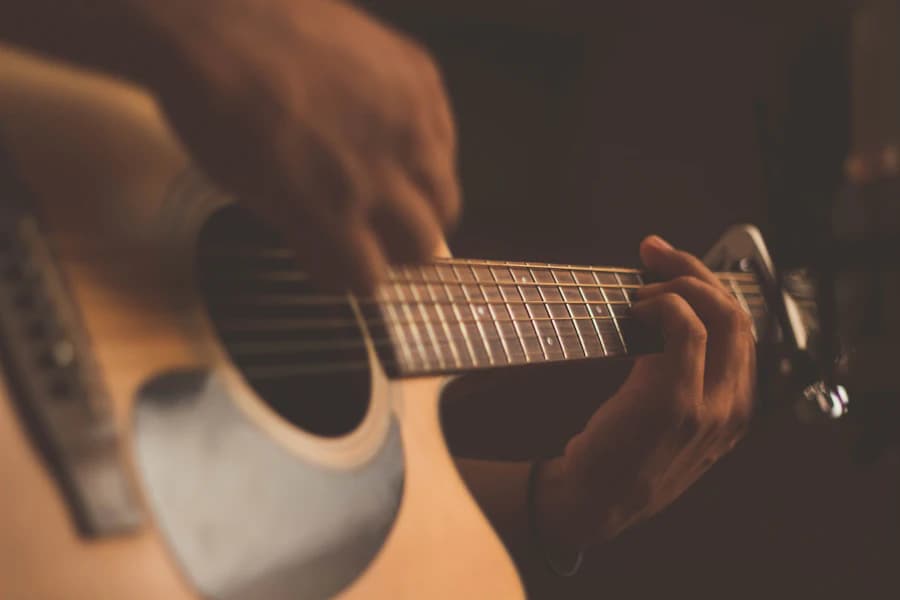
A capo clamps across all the strings at one fret, raising every open string by that many semitones. You keep playing the familiar shapes, but the song sounds in a higher key. Put the capo on fret 2, play a G shape, and you're really playing an A chord.
| Capo | G shape | C shape | D shape | E shape | A shape |
|---|---|---|---|---|---|
| No capo | G | C | D | E | A |
| Fret 1 | G♯/A♭ | C♯/D♭ | D♯/E♭ | F | A♯/B♭ |
| Fret 2 | A | D | E | F♯/G♭ | B |
| Fret 3 | A♯/B♭ | D♯/E♭ | F | G | C |
| Fret 4 | B | E | F♯/G♭ | G♯/A♭ | C♯/D♭ |
| Fret 5 | C | F | G | A | D |
| Fret 7 | D | G | A | B | E |
To use the chart the other way round: find the key you need in a column, then read across to the left to see which capo fret gives it to you with that shape.
Which key suits my voice?
Most songs span about an octave and a half. If the chorus makes you strain or your voice cracks, transpose down two or three semitones. If the verses feel low, breathy and hard to project, transpose up. Children and many female singers often find songs written for male voices more comfortable four or five semitones higher; it's very common, and it's exactly what this tool is for.
Sharps or flats?
Both name the same notes (C♯ and D♭ are the same piano key). Guitarists usually prefer sharps in keys like A, E and D, and flats in keys like F, B♭ and E♭, because that matches how the key signature is written. If the result looks odd, switch and pick whichever reads more easily. The circle of fifths shows which keys use sharps and which use flats.
Common reasons to transpose
- Singing a song in a key that fits your range.
- Playing with others: matching a singer, a recording or another instrument.
- Easier chords: moving a song full of barre chords into a key with open shapes, or using a capo to keep them.
- Ukulele and keyboard: guitar songs often sit better on other instruments in a different key.
Need to check how a transposed chord is played? Look it up in the chord finder.